Overview

Madygen 2027 International Geological Expedition and Summer School
3–31 August 2027 · Madygen Geopark, Southern Tian Shan, Kyrgyzstan
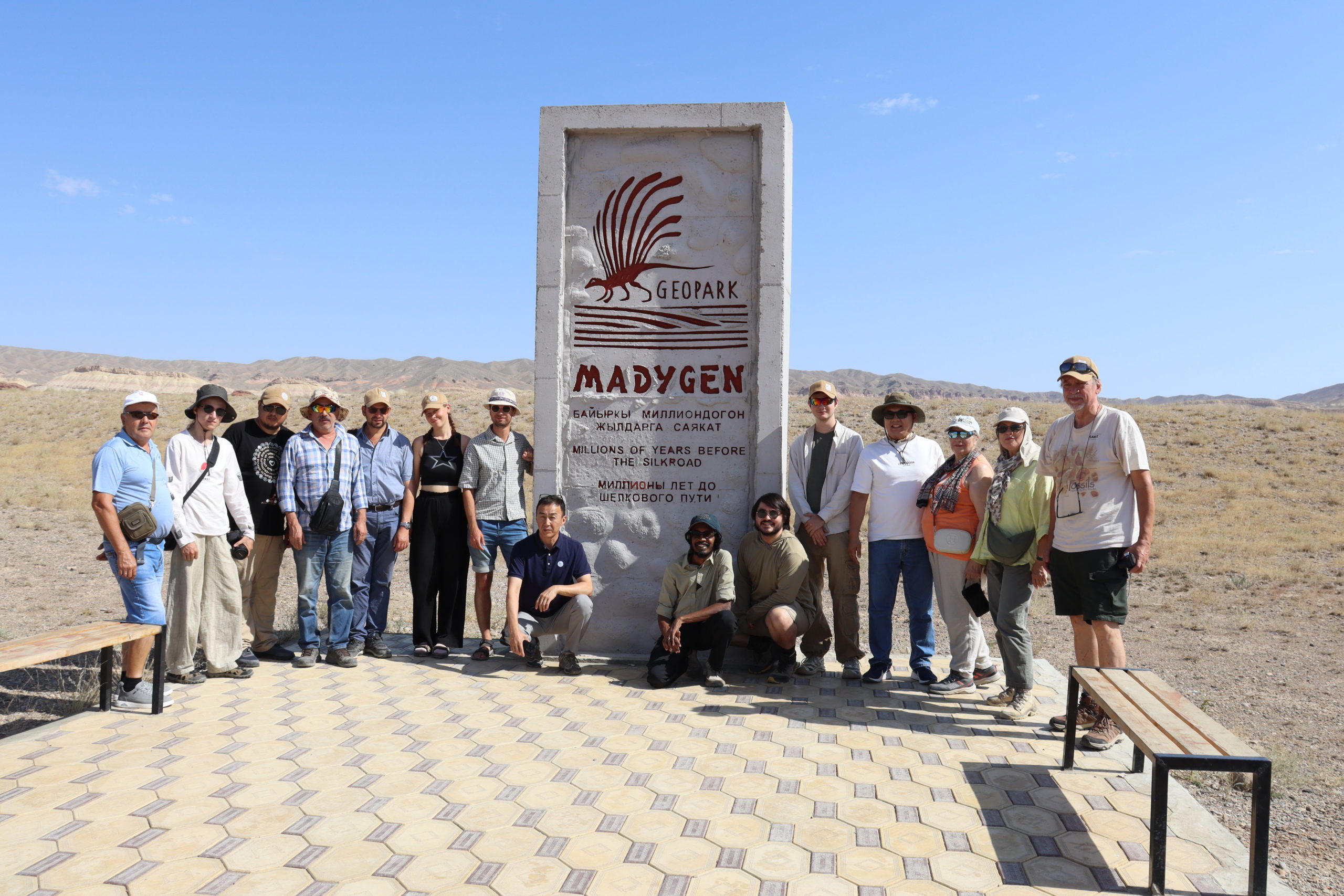
The international expedition will take place in Madygen Geopark in Kyrgyzstan’s Southern Tian Shan.
A hands-on geoscience summer school will run alongside the expedition.
Welcome to one of the world’s most unusual natural laboratories.
Madygen Geopark is known for its exceptionally rich fossil sites and a nearly continuous geological record spanning around 500 million years of Earth’s history. Its best-known finds include ancient insects, fish and rare reptiles adapted for gliding. New finds each year add to our understanding of prehistoric life.
What Makes Madygen Unique
- Rare fossils. Species such as Sharovipteryx mirabilis and Longisquama insignis have been found only here. The local rock sections preserve a wide range of ancient plants and animals, including more than 500 fossil insect species and 12 fossil vertebrate species unique to Madygen.
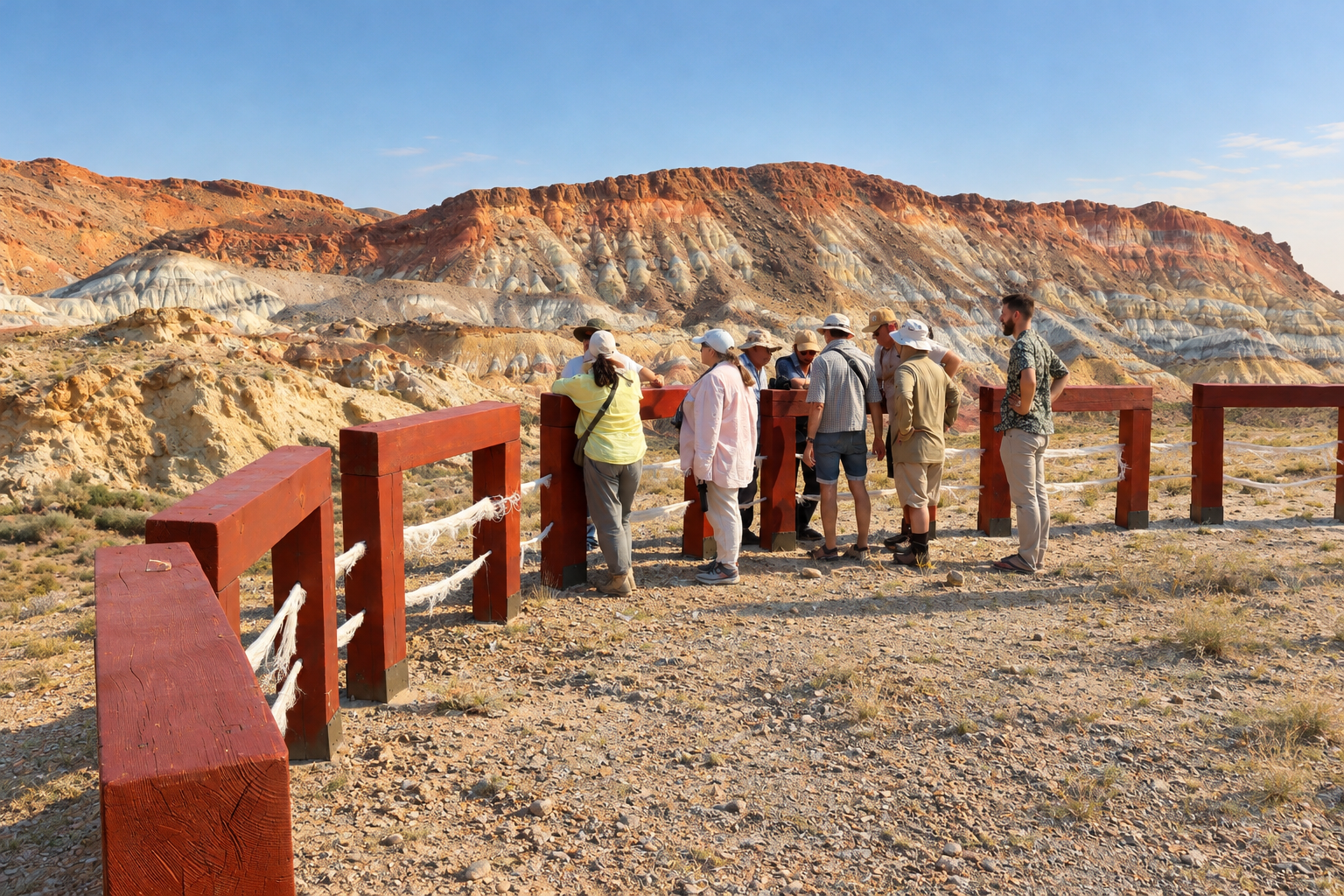
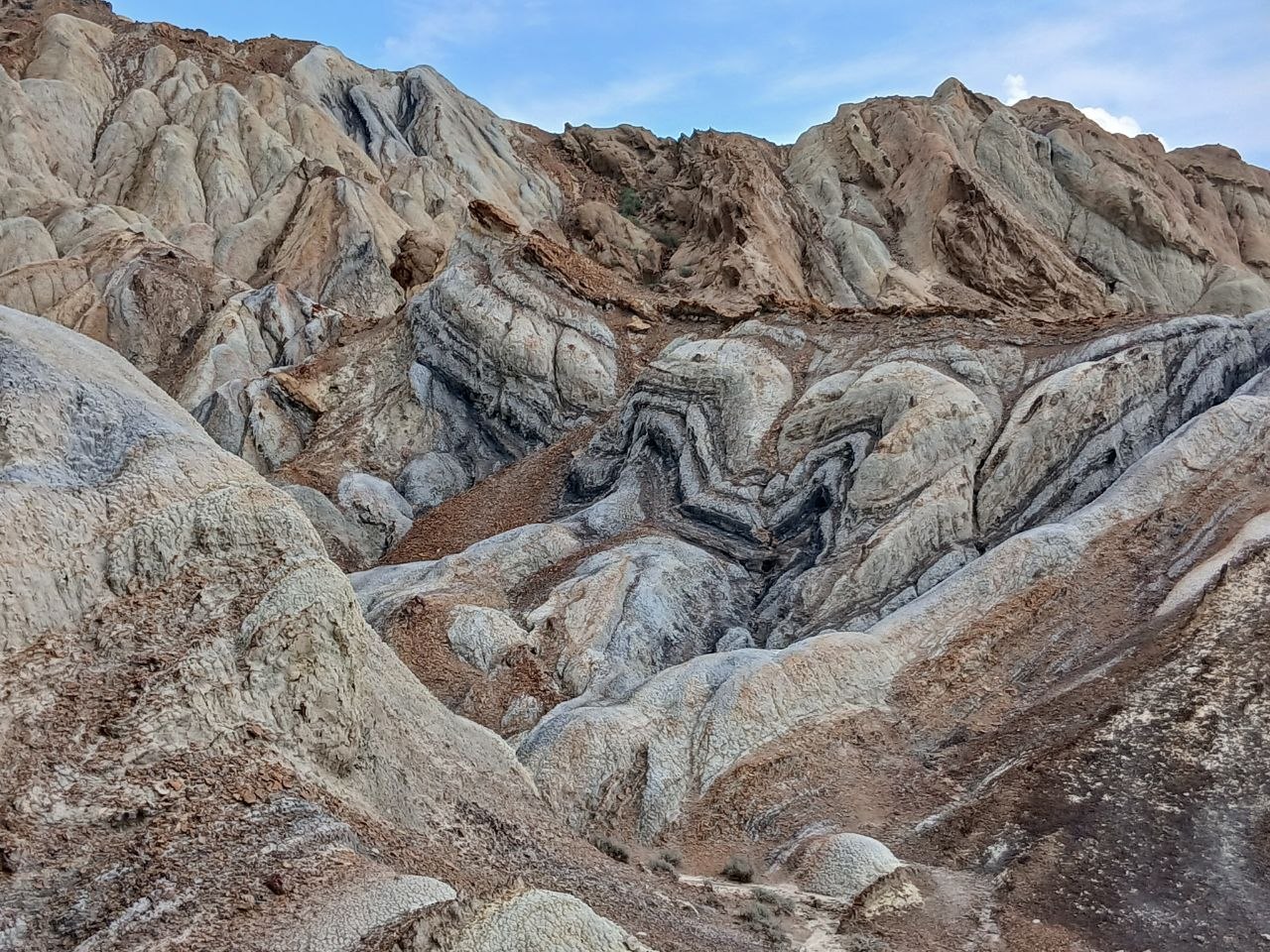
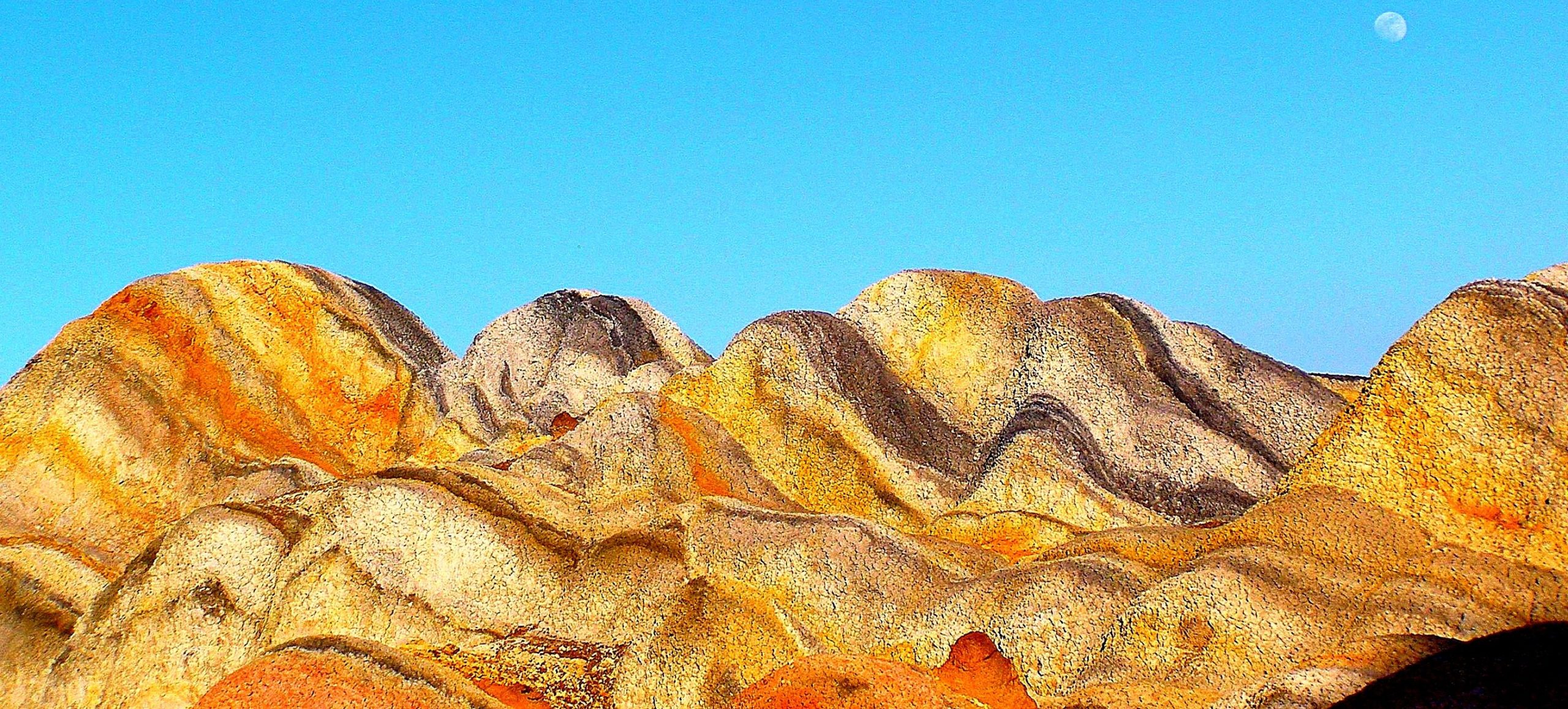
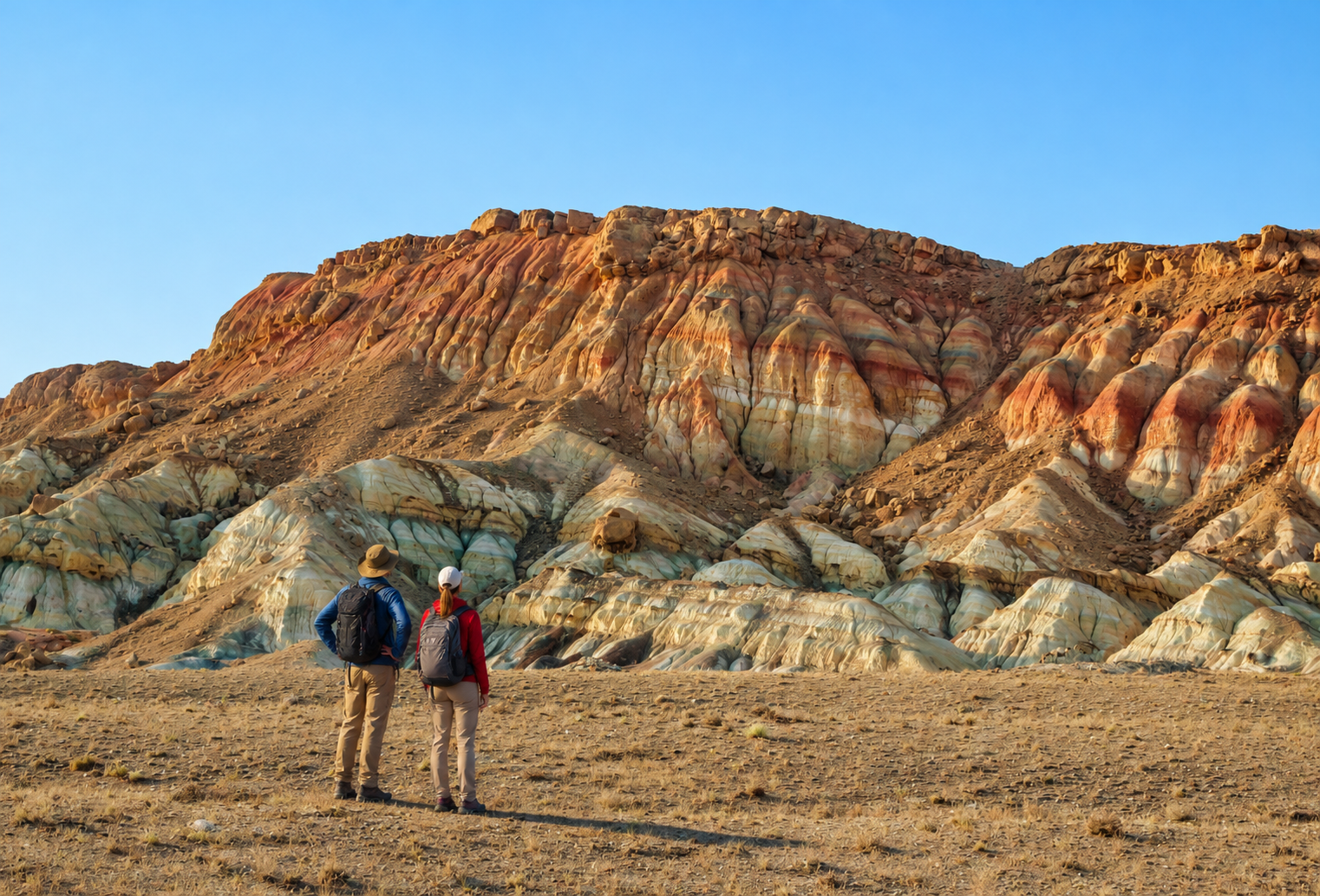
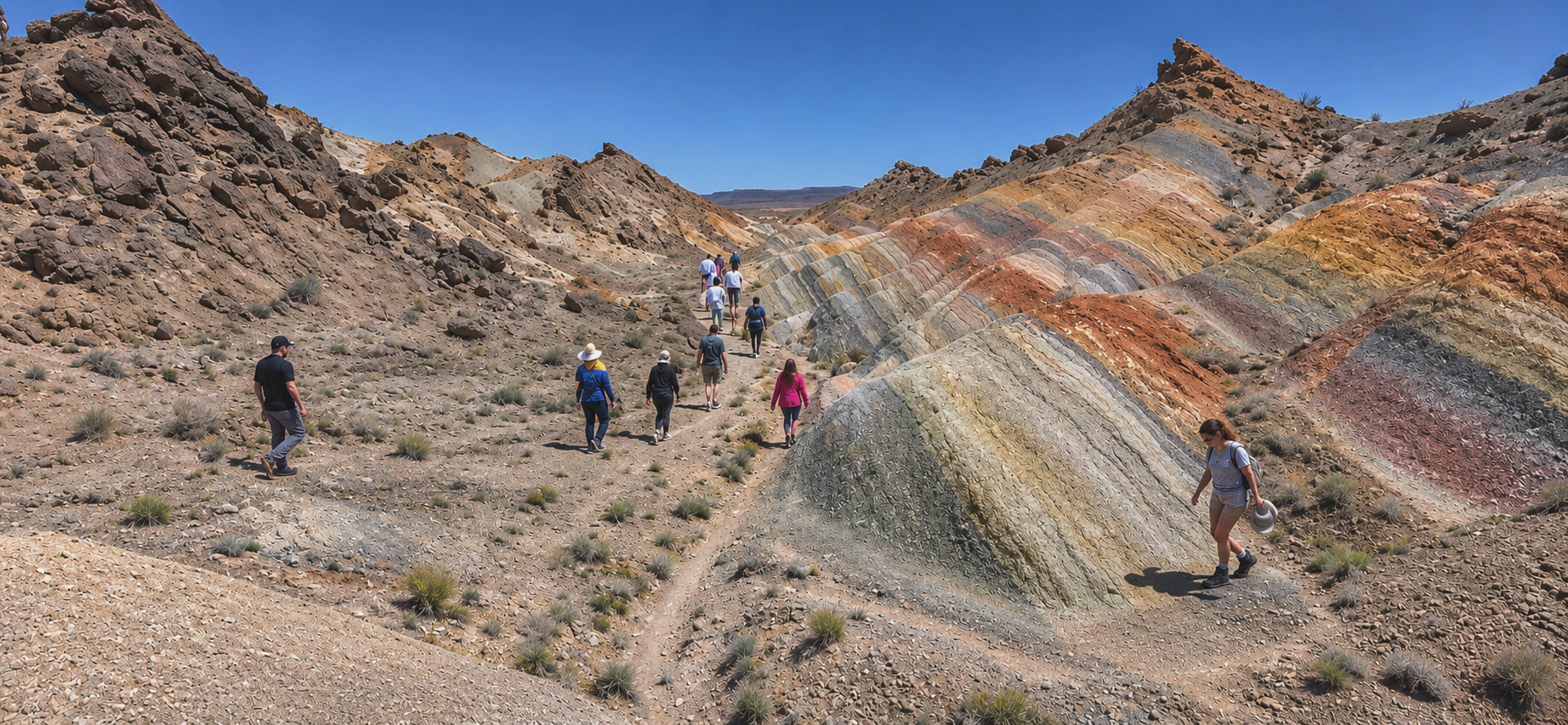
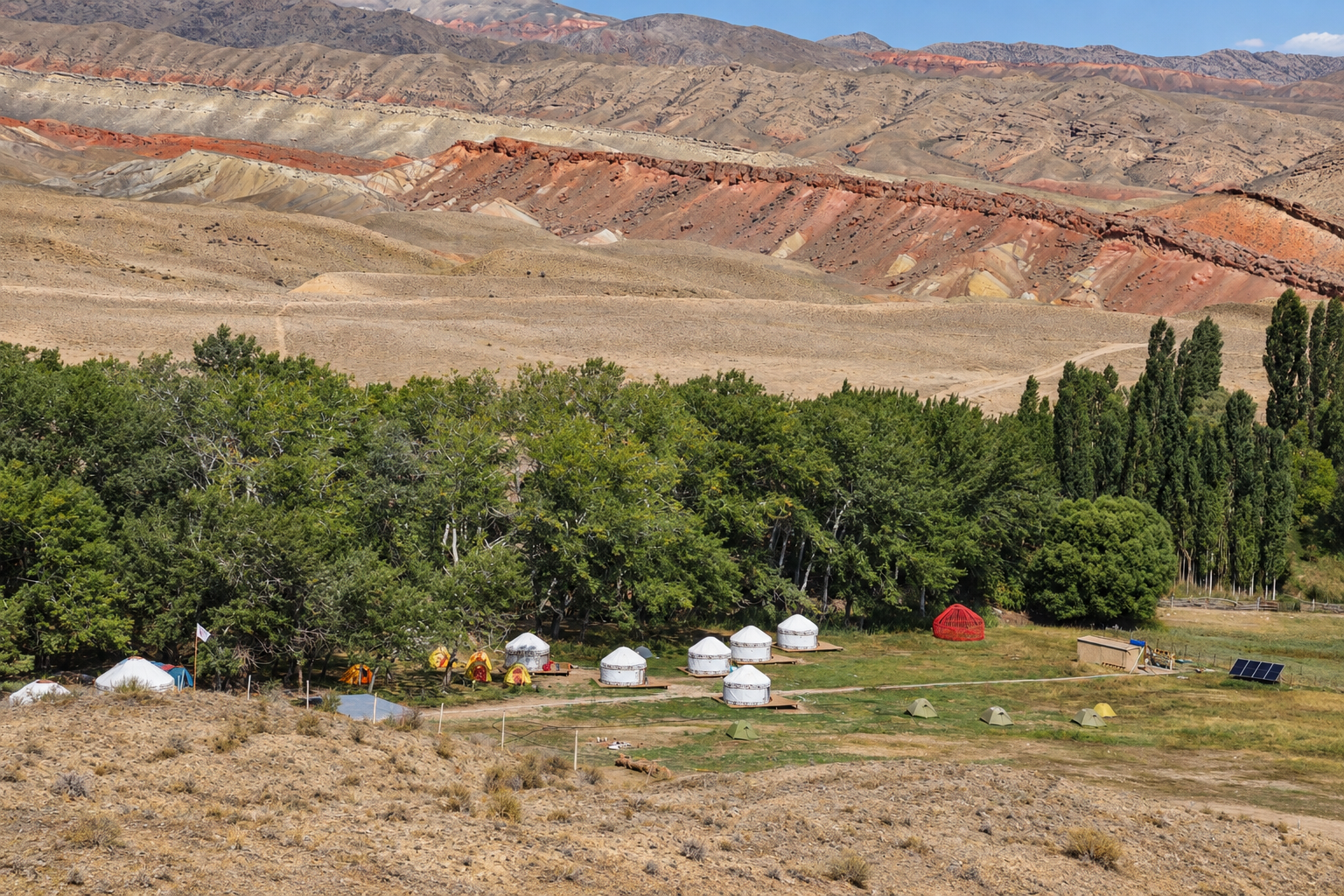
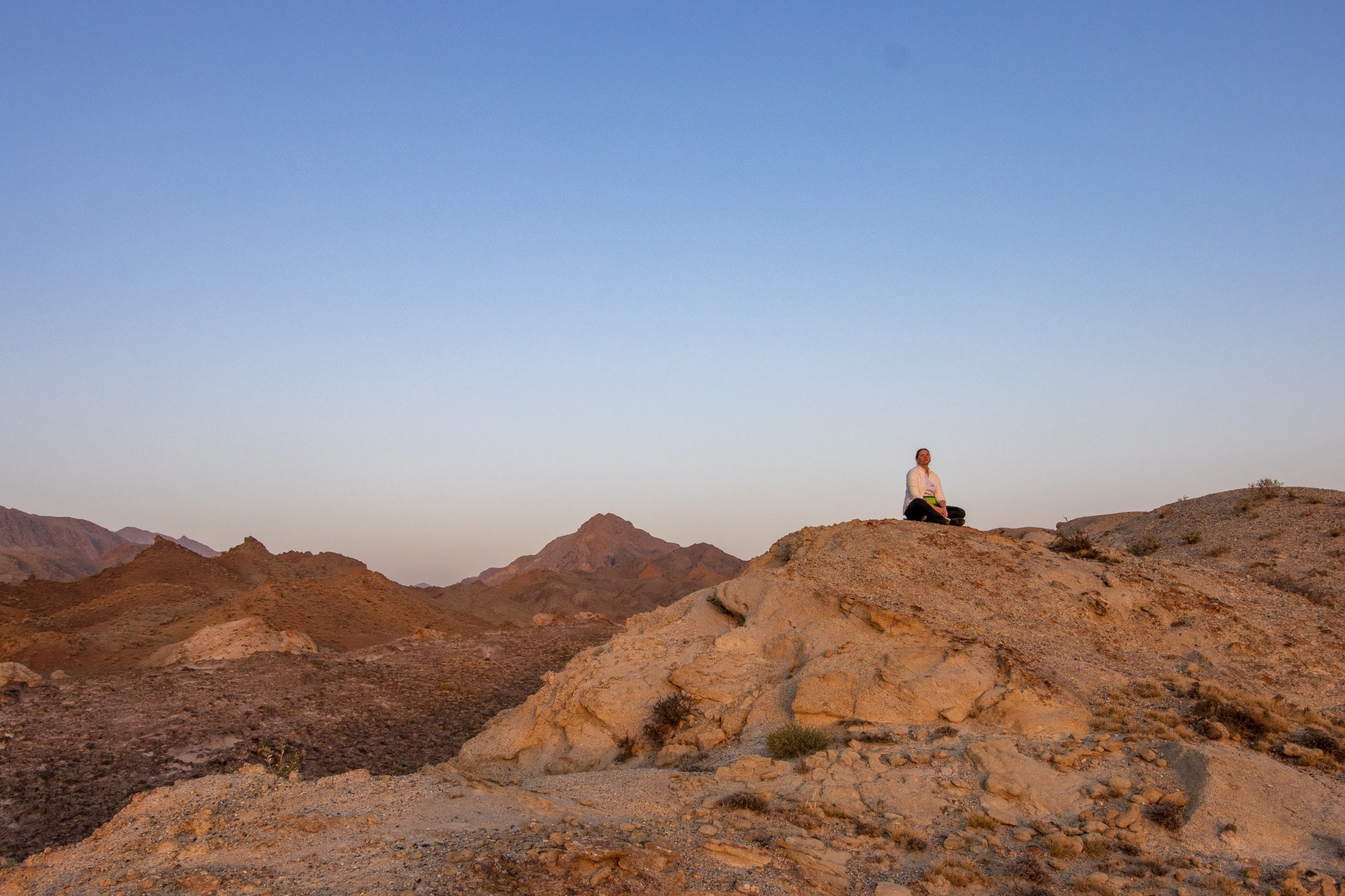
- Colourful rock outcrops in the dry foothills make it easy to see the geology in the field and offer opportunities to search for fossils.
- New discoveries. Recent research has yielded dozens of discoveries about past climates, environments, biodiversity and ancient ecosystems. Madygen remains relatively little known and offers many opportunities for further geological and palaeontological research.
- Geological processes. The striking colours of the mountains reflect a geological history and processes that researchers are still investigating.
Madygen welcomes experienced researchers and those just starting their scientific careers. It offers opportunities to do fieldwork, study fossils and reconstruct ancient ecosystems.
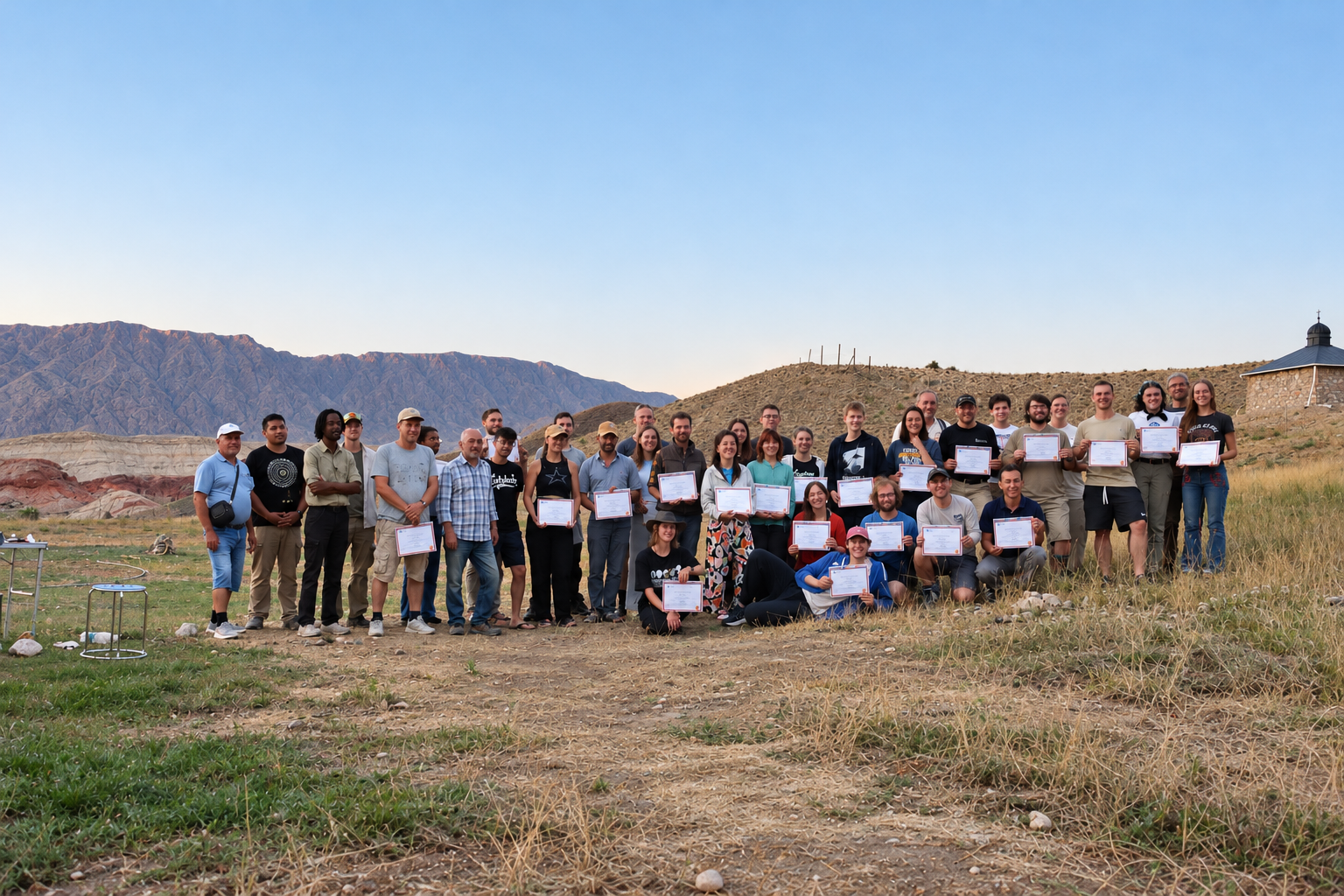
International recognition. Madygen at GSA Connects 2025 in San Antonio, Texas, USA.
Resources on Madygen’s Geology and Palaeontology
- Madygen Field Guide 2026.
- Spiekermann et al. (2026). Charcoalified wood from the Madygen Fossil-Lagerstätte in south-western Kyrgyzstan as evidence of Triassic wildfires in the mid-northern latitudes during the Ladinian and Carnian. Read the paper
- Trubin et al. (2025). New micropalaeontological evidence on the environment and biogeography of the Fergana Basin in Central Asia during the middle Eocene. Request the PDF
- Voigt et al. (2017). Life in a continental lake basin in a warm-temperate biome during the Triassic, with evidence from the Madygen Fossil-Lagerstätte in south-western Kyrgyzstan. Request the PDF
- Geyer et al. (2014). A remarkable Amgan fauna from Sauk Tanga in the Madygen region of Kyrgyzstan, dating to the middle Cambrian (Stage 5). Read the paper
- Moisan et al. (2012). Lycopsid–arthropod associations and egg-laying by odonatopterans on Triassic herbaceous Isoetites. Read the paper
- Fischer et al. (2011). Freshwater sharks from the Triassic of Kyrgyzstan and what they tell us about Mesozoic shark nurseries. Read the paper
- Schoch et al. (2010). A chroniosuchid from the Triassic of Kyrgyzstan and an analysis of evolutionary relationships among chroniosuchians. Read the paper
- Shcherbakov (2008). Madygen as a leading Triassic fossil site before and after Sharov’s research. Read the paper
Expedition Objectives
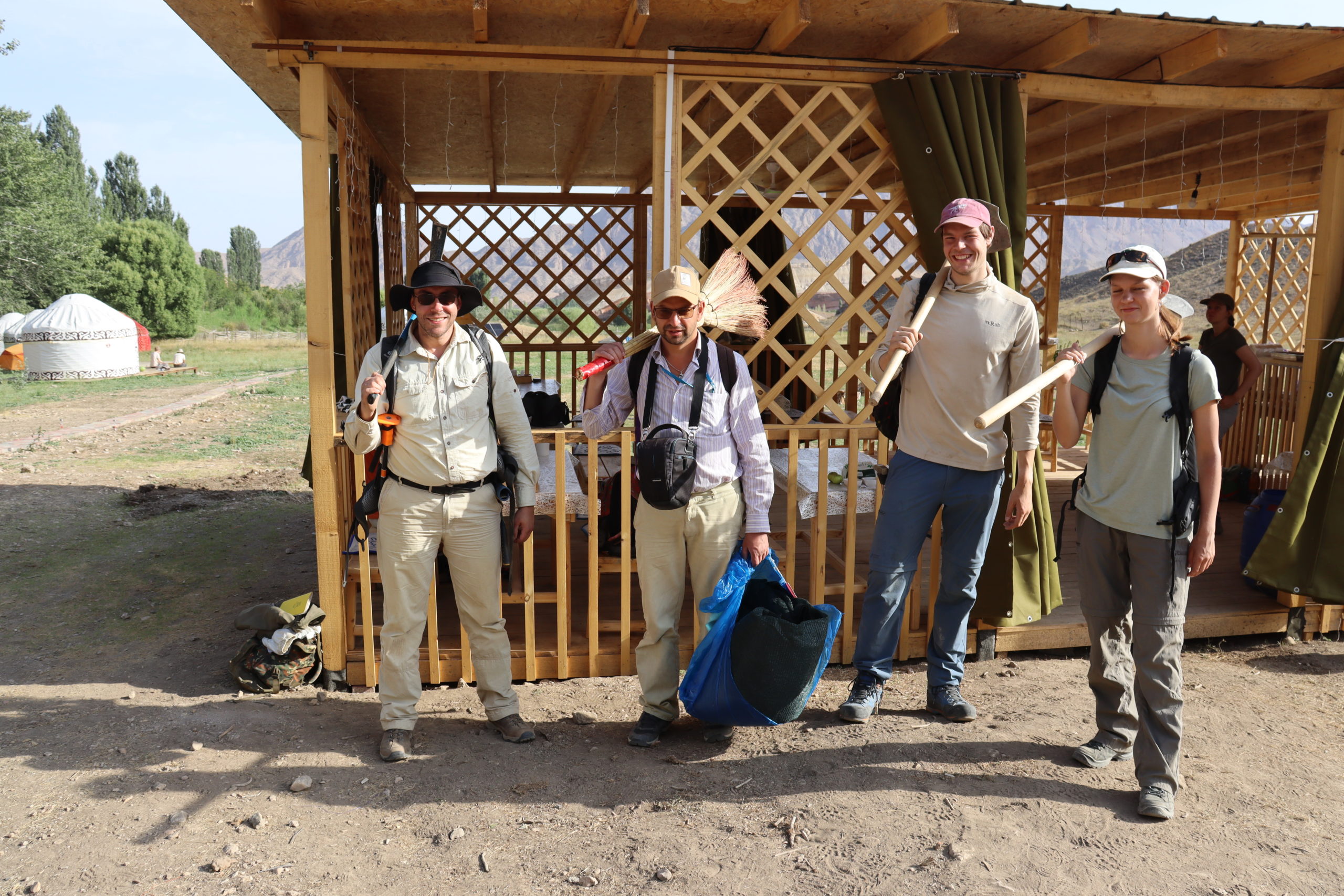
- Conduct systematic palaeontological excavations in key fossil-bearing layers.
- Continue geological mapping and logging rock sections, and look for new fossil sites.
- Support participants’ fieldwork for dissertations and research projects.
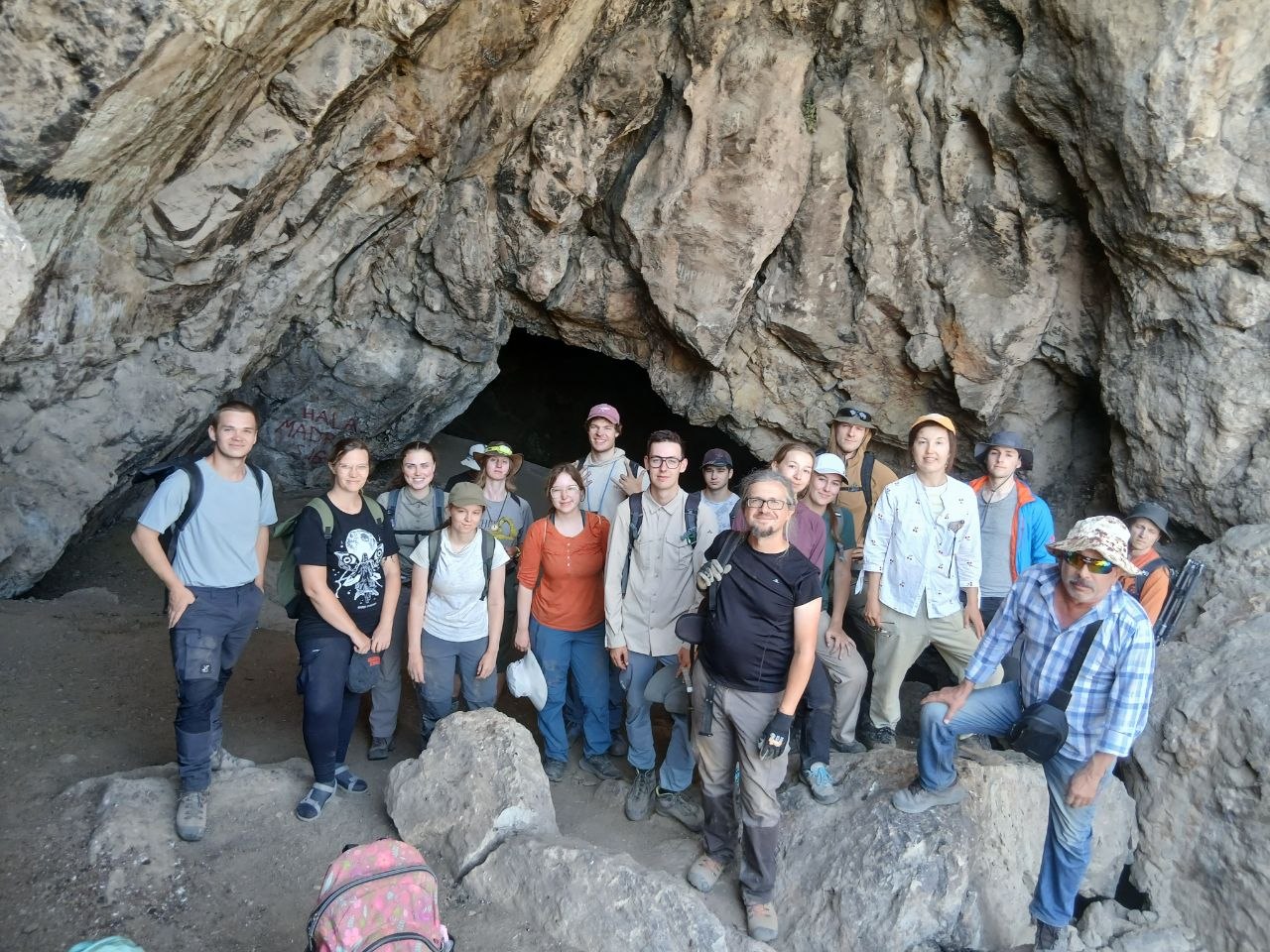
Specialists from Germany, Chile, Israel, Kyrgyzstan and other countries who have studied Madygen for many years will take part. Participants will work alongside experts in vertebrate and invertebrate palaeontology, micropalaeontology, palaeobotany, structural geology, sedimentology, geological field mapping and hydrogeology. You will learn field methods and gain hands-on experience under their guidance.
Travel and Accommodation
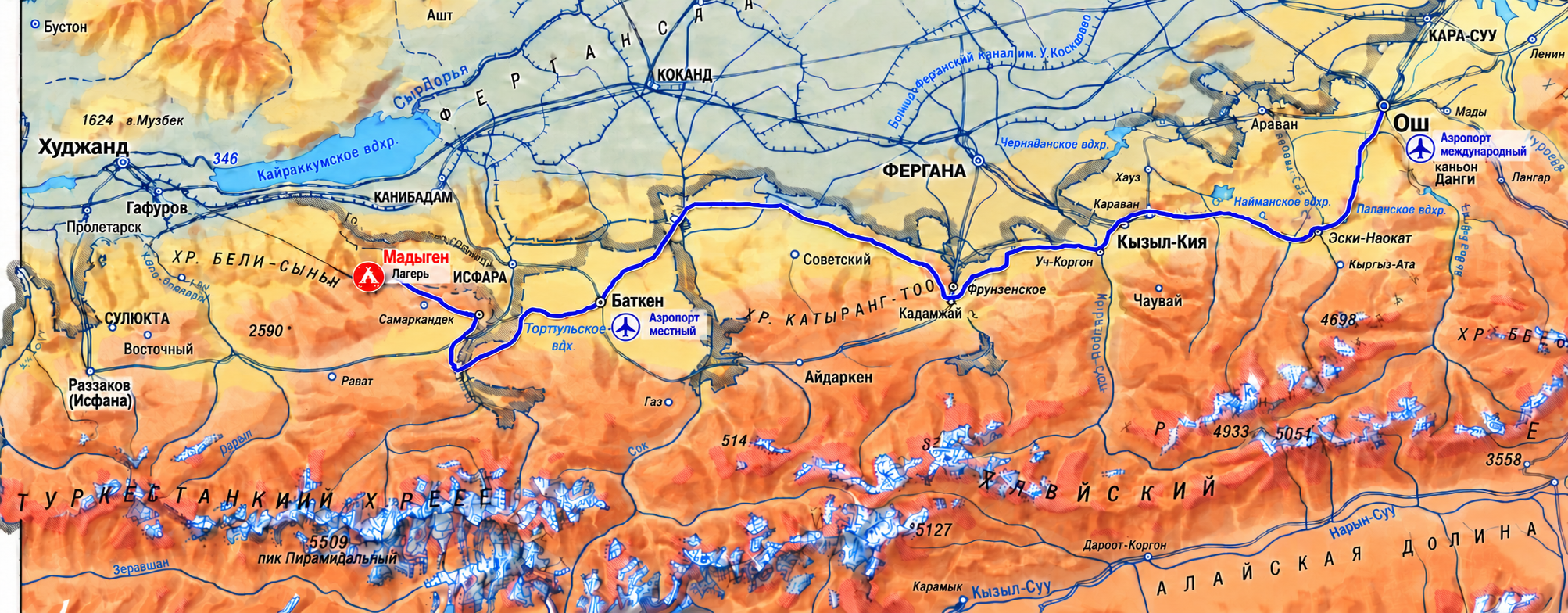
The field camp is in Madygen Geopark, 70 km from Batken, 300 km from Osh, Kyrgyzstan, and 170 km from Khujand, Tajikistan.
Participants in Group 1 should arrive at Osh International Airport by 3 August. The organisers will meet them and arrange accommodation at a guesthouse. The group will leave for camp early on 4 August.
Field Camp Facilities
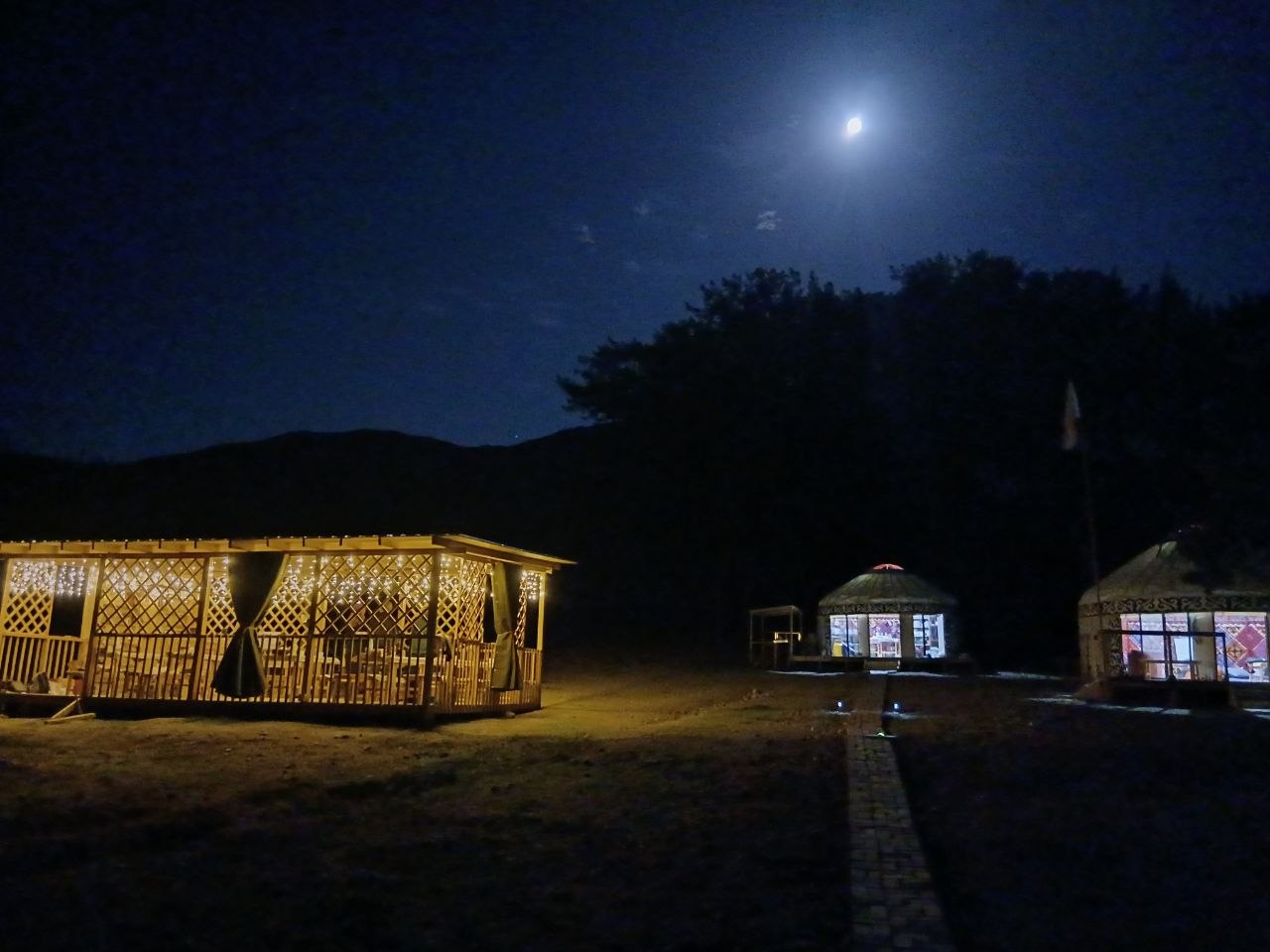
- On-site cook and first aid provision.
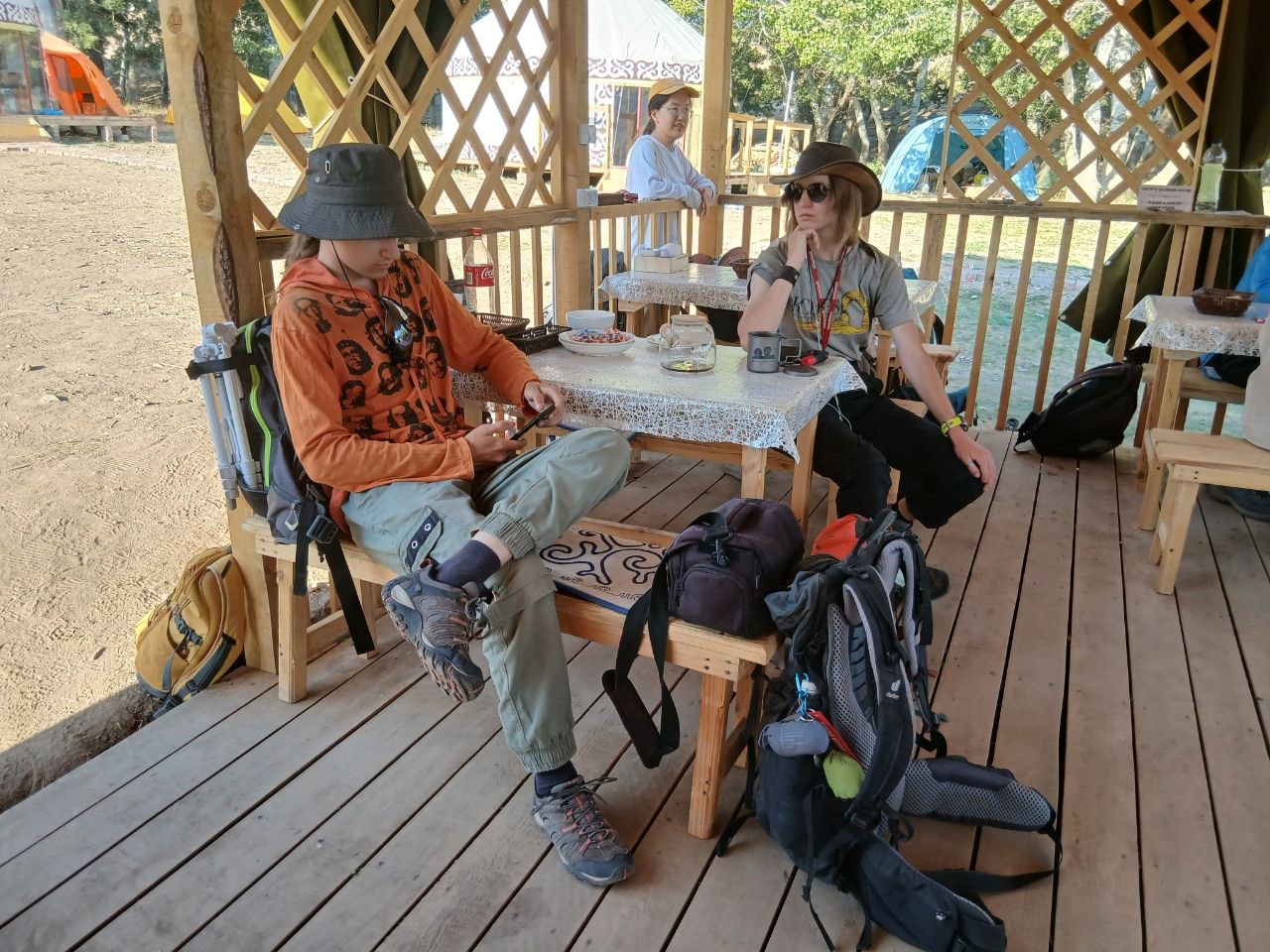
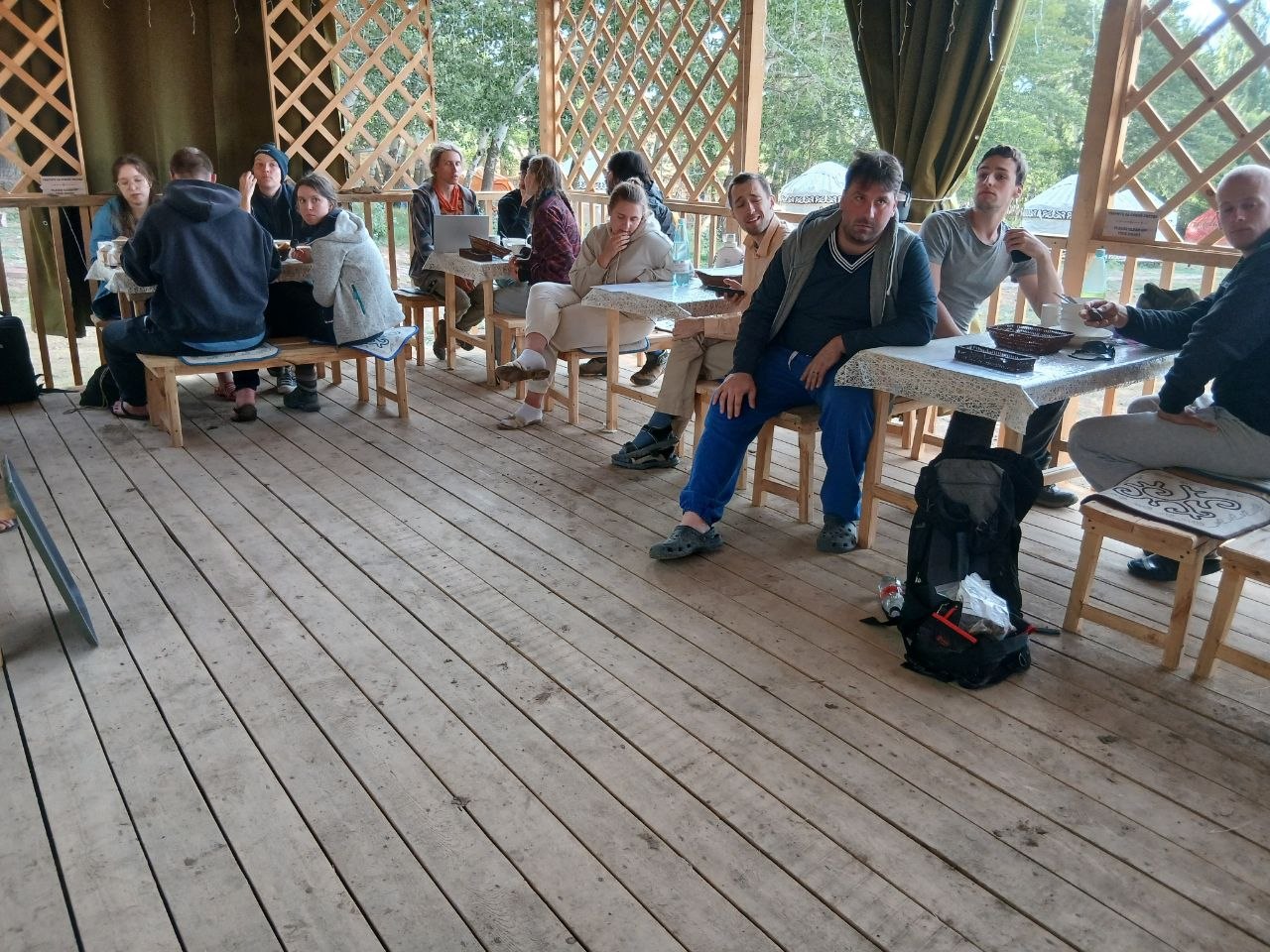
- Dining area, showers and toilets.
- Environmentally friendly wastewater treatment system.
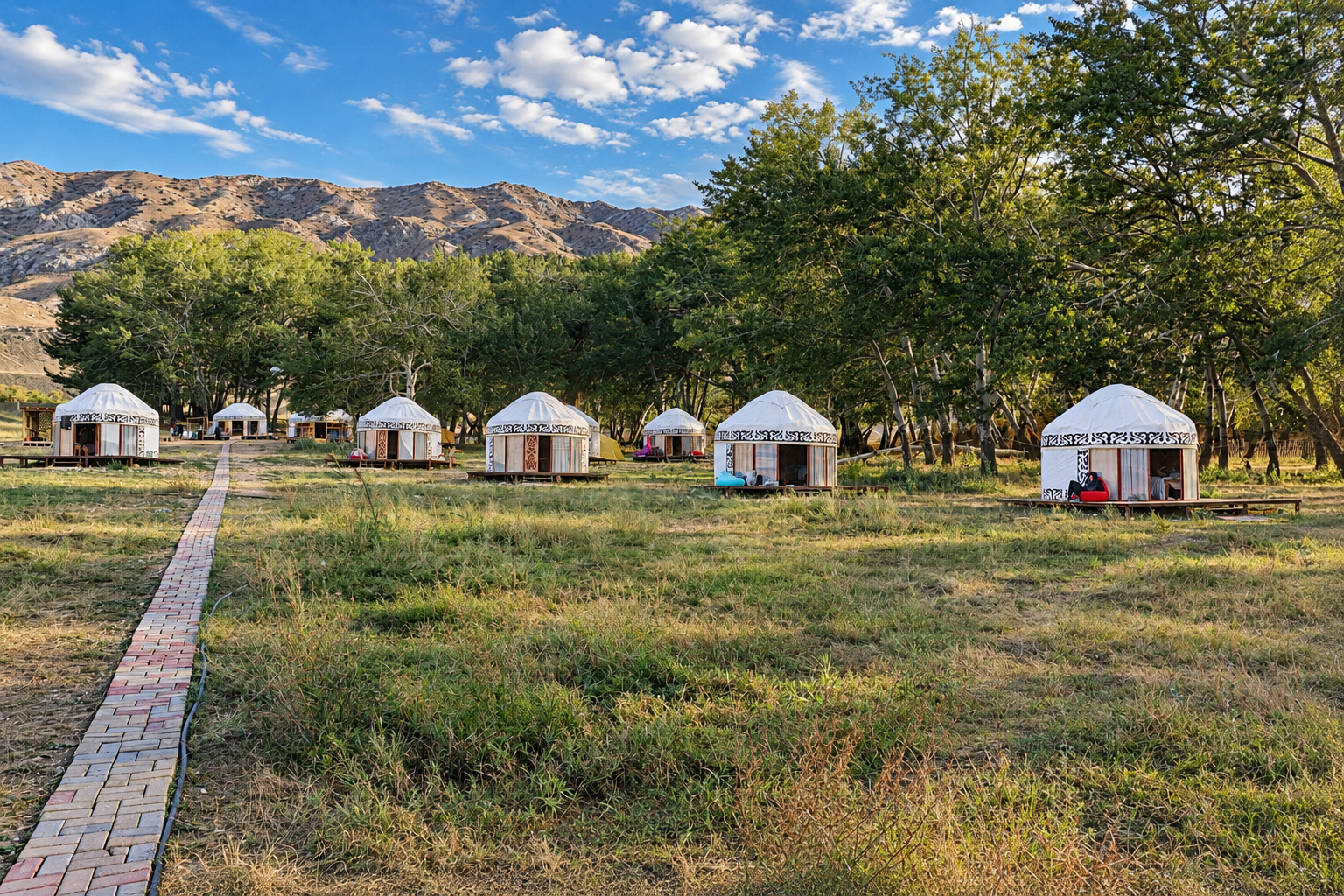
- Poplar grove beside a karst spring with clean drinking water.
- Four-wheel-drive vehicles for field trips.
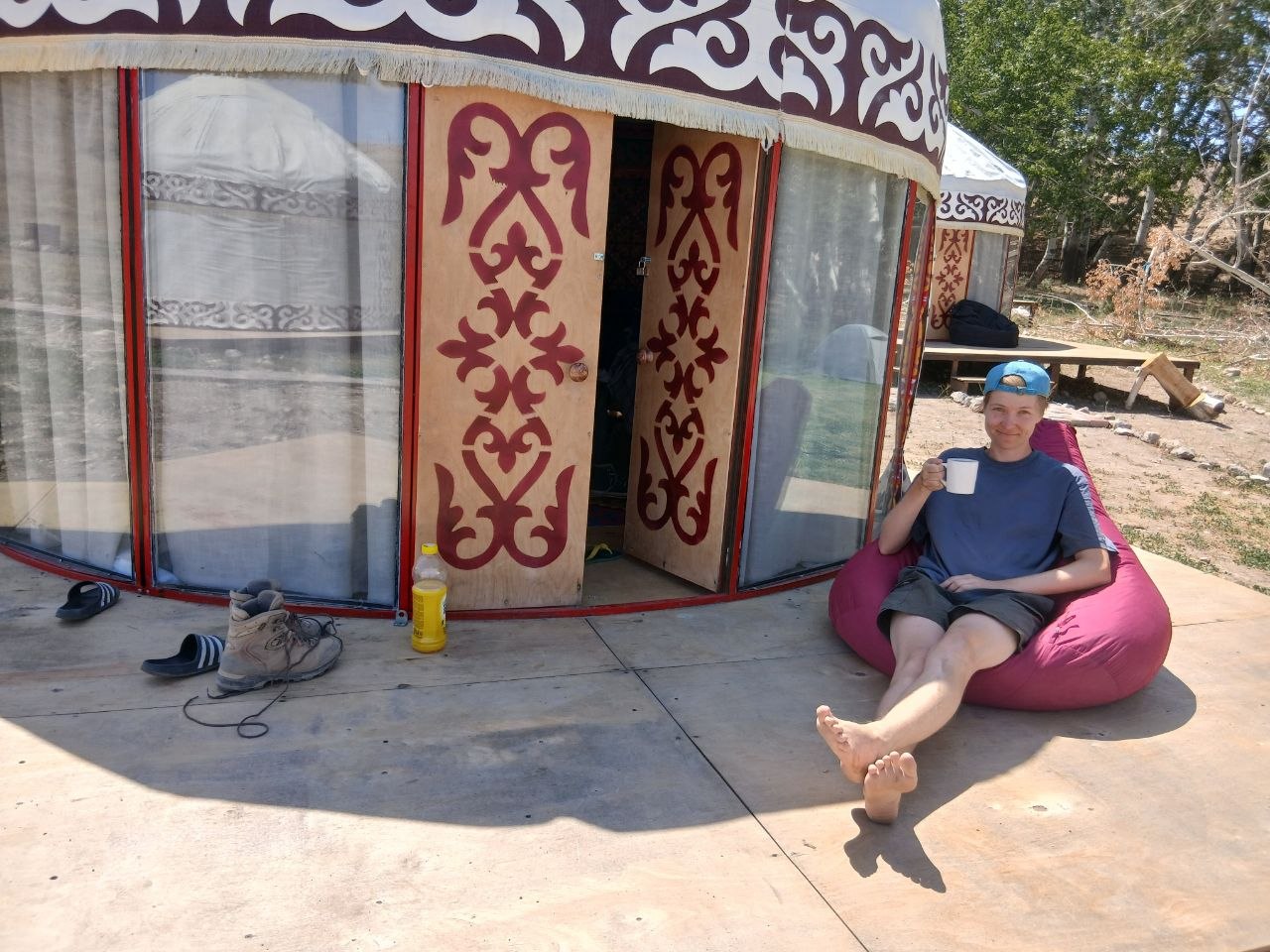
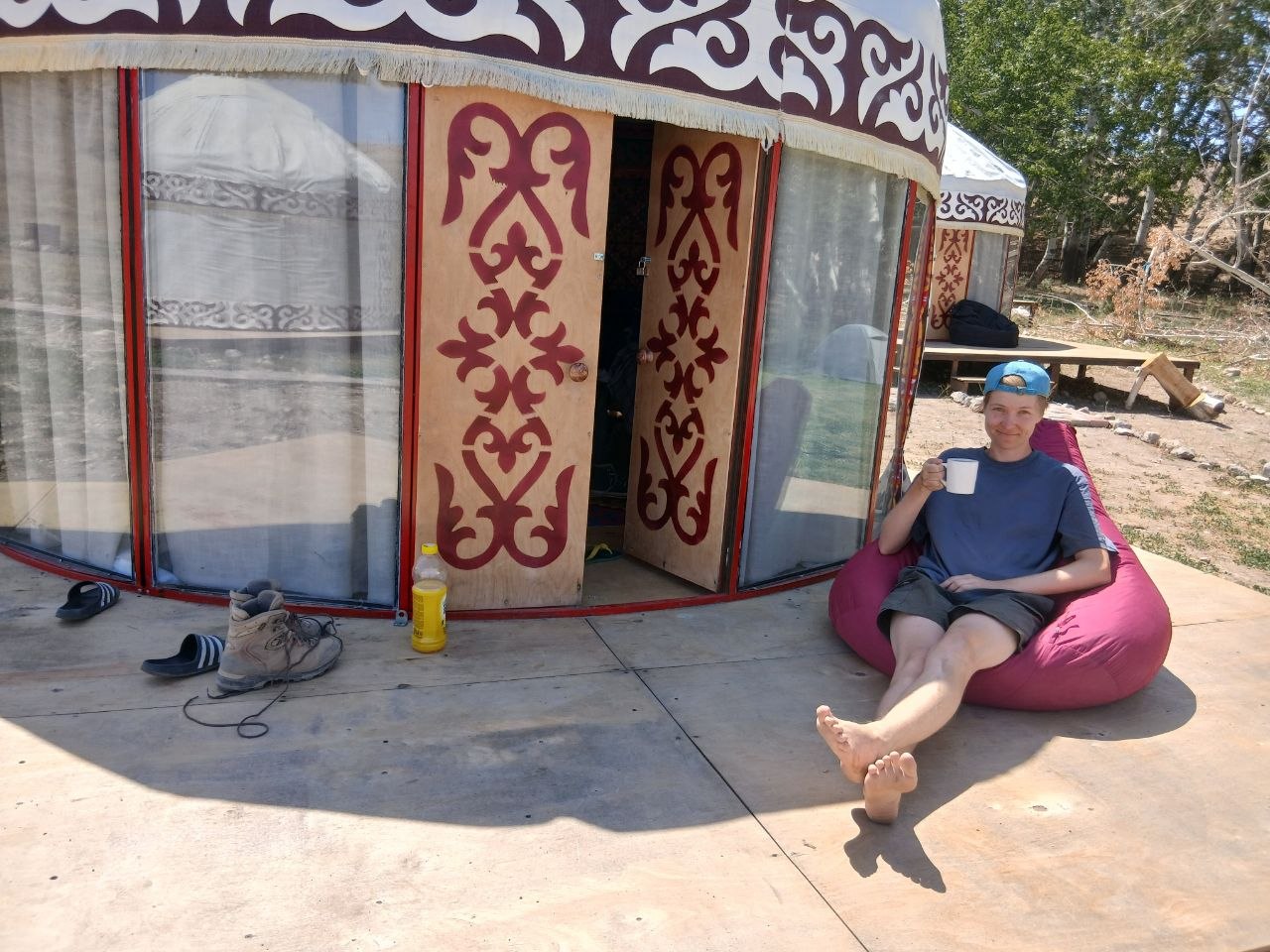
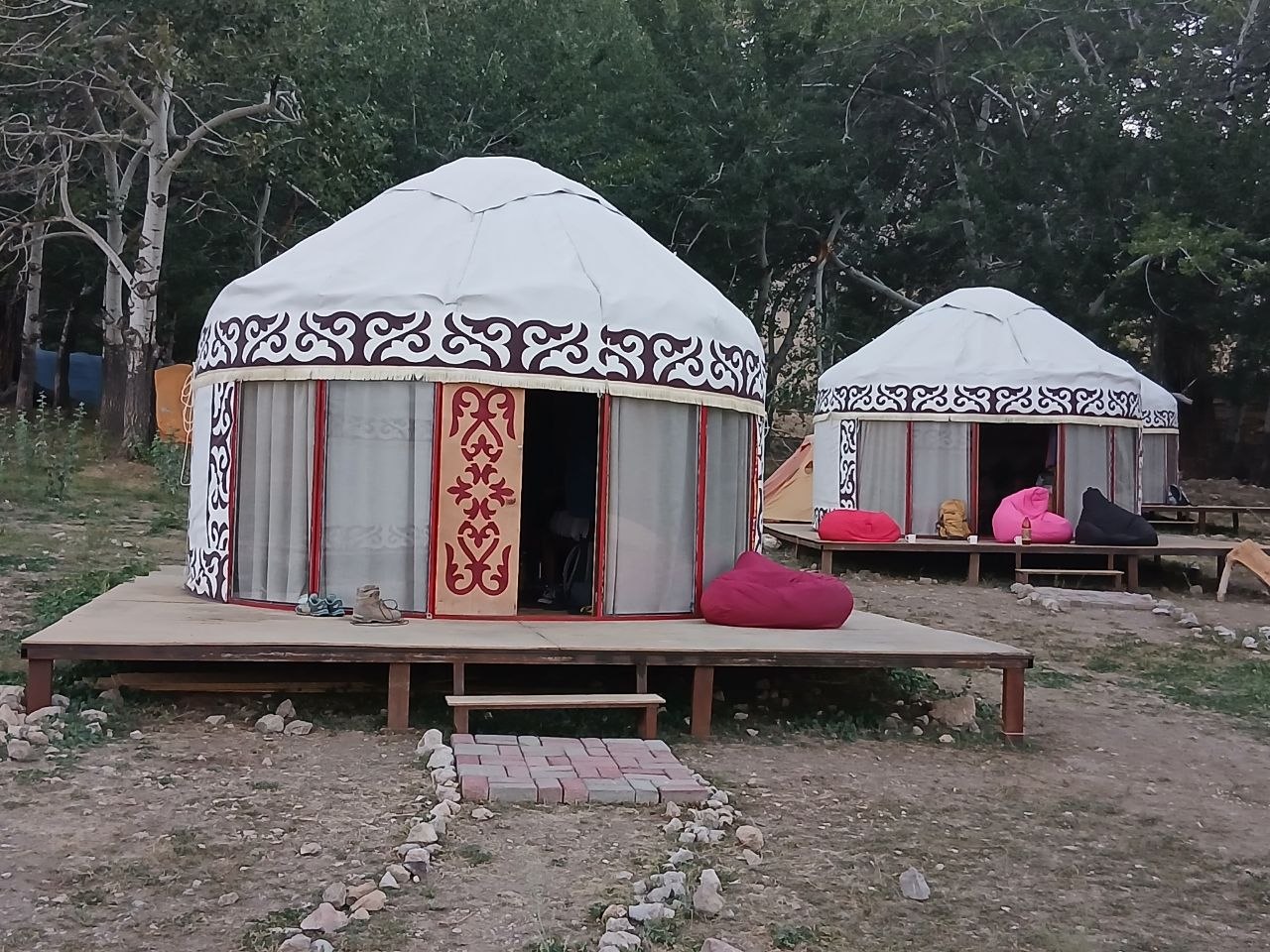
- Two-person yurts or single-person tents.
Camp Life
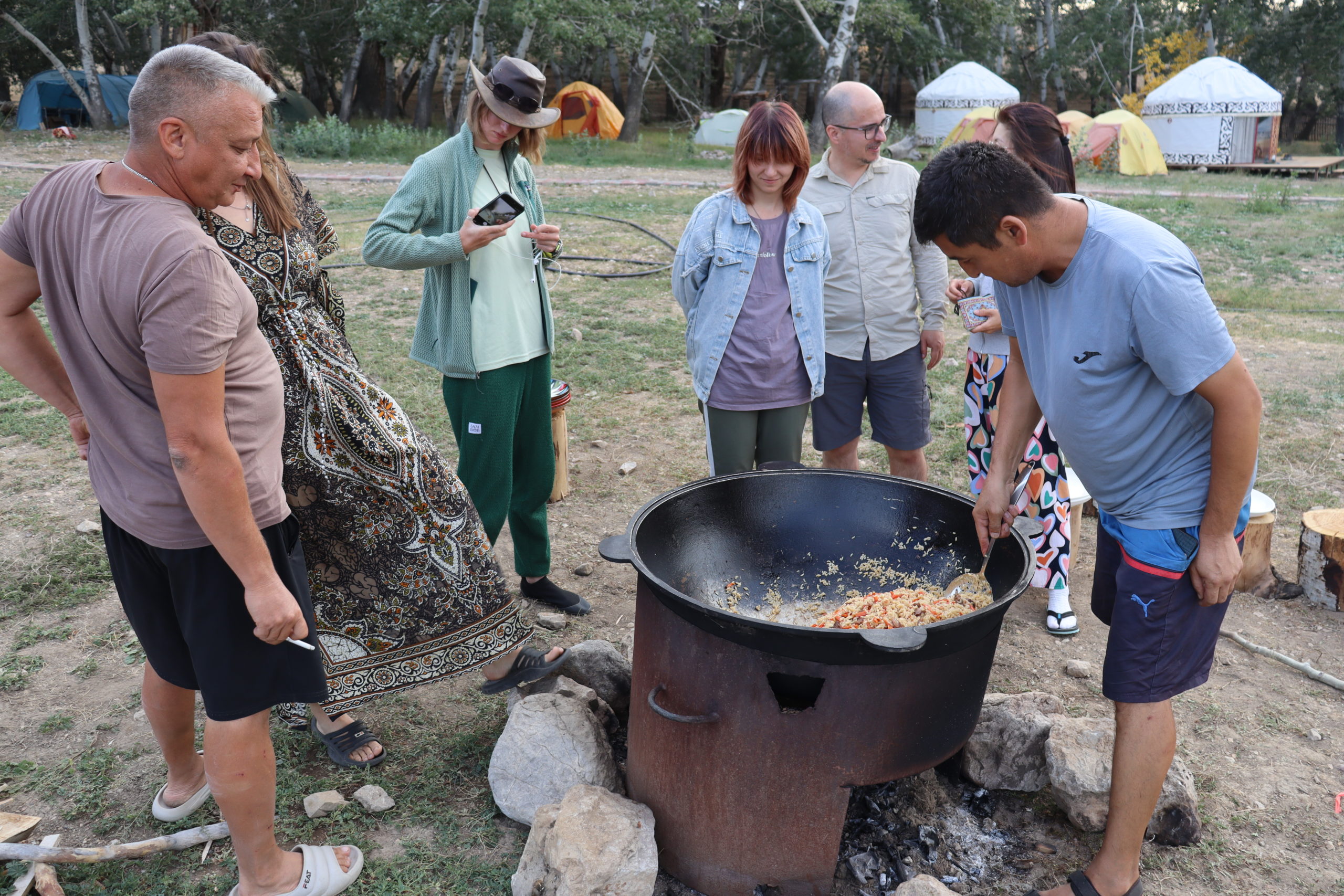
The expedition brings together researchers from around the world each year. In the evenings, participants from different branches of geology gather around the campfire to discuss their findings and share ideas. Many stay in touch and continue working together on projects and publications after the expedition.
Who Can Take Part
- Professional researchers.
- Early-career scientists.
- Master’s students and undergraduates in the later years of their degree.
- Geology and palaeontology enthusiasts interested in contributing to scientific research.
Visas and Permits
Check whether you need a visa for Kyrgyzstan and how long you can stay based on your passport and travel dates. Use the official visa eligibility checker or consult the consular information portal.
If you need a visa or plan to stay beyond your permitted period, check the available options on the official e-visa portal. Contact the organisers in advance if you need supporting documents.
Participation Fees
| Duration | Dates in 2027 | Fee |
| 14 days | 3–17 August or 17–31 August | US$800 |
| 28 days | 3–31 August | US$1,300 |
After 15 January 2027, the participation fee will be 20% above the original rate.
Included in the fee
- Accommodation at the field camp.
- Meals, cooking services and consumable supplies.
- Return transport between Osh and the field camp.
- Transport to fieldwork sites.
Paid separately
- International flights to and from Osh.
- Hotel accommodation in Osh or Batken.
- A single room at the guesthouse.
- Extra nights before 3 August or after 31 August.
Expedition Programme
Group 1
- Day 1 · 3 August · Arrive in Osh. Meet the organisers at Osh International Airport, take a city tour and check in at the guesthouse.
- Day 2 · 4 August · Travel to field camp. The drive from Osh to Madygen takes about six hours (approximately 300 km). At camp, meet the group, learn about the expedition’s objectives and attend a safety briefing. The research team will introduce Madygen’s geology and palaeontology.
- Day 3 · 5 August · Introductory field excursion.
- Days 4–12 · 6–14 August · Field research. Take part in systematic fossil excavations, micropalaeontological fieldwork, geological mapping and logging rock sections. Participants can carry out fieldwork for their dissertations and individual research projects with support from the research team.
- Day 13 · 15 August · Field excursion. Visit Kan-i-Gut Cave, Sai-Sogul and the Sphinx Valley.
- Day 14 · 16 August · Return to Osh. Drive from Madygen to Osh (about 300 km and six hours) and check in at the guesthouse. Participants on the four-week programme can stay in camp and continue fieldwork.
Group 2
- Day 15 · 17 August · Group 1 departs and Group 2 arrives. The organisers meet Group 2 at Osh International Airport. The group takes a city tour and checks in at the guesthouse.
- Day 16 · 18 August · Travel to field camp. The drive from Osh to Madygen takes about six hours (approximately 300 km). At camp, meet the group, learn about the expedition’s objectives and attend a safety briefing. The research team will introduce Madygen’s geology and palaeontology.
- Day 17 · 19 August · Introductory field excursion.
- Days 18–26 · 20–28 August · Field research. Take part in systematic fossil excavations, micropalaeontological fieldwork, geological mapping and logging rock sections. Participants can carry out fieldwork for their dissertations and individual research projects with support from the research team.
- Day 27 · 29 August · Field excursion. Visit Kan-i-Gut Cave, Sai-Sogul and the Sphinx Valley.
- Day 28 · 30 August · Return to Osh. Drive from Madygen to Osh (about 300 km and six hours) and check in at the guesthouse.
- Day 29 · 31 August · Depart from Osh. Transfer to the airport.
How to Apply
Application deadline: 31 December 2026.
Email Madygen2027@protonmail.com and include:
- Your full name, institutional affiliation or place of work or study, and contact details.
- Your preferred dates: 4–31 August, 4–17 August or 18–31 August.
- Your main research interests.
- Any topics you would like to explore for an undergraduate or master’s dissertation.
[Editor: Confirm which dates applicants should use. The application dates above differ from the dates in the fee table.]
We will let you know the outcome of your application by 15 January 2027.
After 15 March 2027, the participation fee will be 20% above the original rate.
The fee section says 15 January 2027, while this section says 15 March 2027.
Before applying, check your passport’s validity, visa requirements and medical insurance. Confirm whether your insurance covers medical transport back to your home country.
Learn from Leading Scientists
Madygen is a natural laboratory in the Southern Tian Shan. Running the research expedition and summer school side by side gives students and researchers from different countries a chance to work together. Professors and students excavate together in the field and continue their conversations around the campfire.
Scientists from Germany, the United Kingdom, Hong Kong, Italy, Chile, Kyrgyzstan, Kazakhstan and other countries will teach and carry out research. They have studied Madygen for many years. Participants will learn from specialists in vertebrate and invertebrate palaeontology, microfauna, botany, structural geology, sedimentology, hydrogeology and digital palaeontology. In the field, you will learn to use a phone or camera to create 3D photogrammetric models of rock layers. You will also learn how researchers use CT scanning and process the resulting data.
Expedition Logistics
Location. The field camp is 70 km from Batken and 300 km from Osh.
Arriving in Kyrgyzstan. You can fly into Osh International Airport, where the organisers will meet you and help arrange hotel accommodation. You can also fly via Bishkek and continue to Osh:
- By expedition transport.
- On a domestic flight from Bishkek to Osh (about one hour).
Preparing for field camp. One day is set aside to buy food, equipment and supplies, brief participants and introduce the expedition’s objectives, previous research, published results and what the team hopes to achieve.
Field Camp Facilities
- On-site cook and fresh food.
- Dining area, showers and toilets.
- Environmentally friendly wastewater treatment system.
- Poplar grove next to a karst spring with clean drinking water.
- Four-wheel-drive vehicles for field trips.
- Tents or yurts.
Daily Life and Free Time
Each year the expedition brings together researchers from across the world and from different branches of geology. Evening campfires are a chance to discuss the day’s work, share ideas and get to know one another. Many participants go on to collaborate on research projects and publications or remain friends long after the expedition.
Why August
August offers good conditions for fieldwork:
- Cooler temperatures.
- Little rain or wind.
- Long daylight hours.
Who Can Take Part
- Professional researchers.
- Early-career scientists.
- Master’s students and undergraduates in the later years of their degree.
- Geoscience enthusiasts.
Organisers and Partners
- Tian Shan Geological Society
- Adyshev Institute of Geology, National Academy of Sciences of the Kyrgyz Republic
- Institute of Geology, TU Bergakademie Freiberg
- Hong Kong Palaeontological Research Centre
- Madygen Geopark Public Foundation
2027 Field Guide
Open the 2027 field guide to download or print a copy.
Application Enquiries
Email: info@geotianshan.org
Phone or Telegram: +996 557 991663
We invite palaeontologists, geologists, stratigraphers and other researchers to join the Madygen 2027 expedition.
We welcome collaboration with research centres, associations, institutes, universities and other interested organisations.
Madygen offers a field setting where scientists from different countries can work together. Students can gain experience alongside established researchers in geology, structural geology, historical geology, palaeontology, stratigraphy and related fields.
Archaeologists, historians and biologists are also welcome to join.
Additional resources
International Madygen Team

Some publications
- The continental Triassic Madygen Lagerstätte
- Voigt et al. (2010)_GMIT
- Shcherbakov_2008_Alavesia_Madygen Triassic Lagerstaette
- Madygenerpeton
- Madygen_Triassic_Lagerstatte_number_one
- Lycopsid — arthropod associations and odonatopteran oviposition on Triassic herbaceous Isoetites
- Geyer et al., 2014 — Kyrgyzstan
- Fischer et al 2012 — The shark fauna and its nurseries from Madygen
- Fischer et al 2007 — Egg capsules from Madygen, Central Asia
- Buchwitz et al Chroniosuchian osteoderm histology AZ
Itinerary
Group 1
- Day 1 · 3 August · Arrive in Osh. Meet the organisers at Osh International Airport, take a city tour and check in at the guesthouse.
- Day 2 · 4 August · Travel to field camp. The drive from Osh to Madygen takes about six hours (approximately 300 km). At camp, meet the group, learn about the expedition’s objectives and attend a safety briefing. The research team will introduce Madygen’s geology and palaeontology.
- Day 3 · 5 August · Introductory field excursion.
- Days 4–12 · 6–14 August · Field research. Take part in systematic fossil excavations, micropalaeontological fieldwork, geological mapping and logging rock sections. Participants can carry out fieldwork for their dissertations and individual research projects with support from the research team.
- Day 13 · 15 August · Field excursion. Visit Kan-i-Gut Cave, Sai-Sogul and the Sphinx Valley.
- Day 14 · 16 August · Return to Osh. Drive from Madygen to Osh (about 300 km and six hours) and check in at the guesthouse. Participants on the four-week programme can stay in camp and continue fieldwork.
Group 2
- Day 15 · 17 August · Group 1 departs and Group 2 arrives. The organisers meet Group 2 at Osh International Airport. The group takes a city tour and checks in at the guesthouse.
- Day 16 · 18 August · Travel to field camp. The drive from Osh to Madygen takes about six hours (approximately 300 km). At camp, meet the group, learn about the expedition’s objectives and attend a safety briefing. The research team will introduce Madygen’s geology and palaeontology.
- Day 17 · 19 August · Introductory field excursion.
- Days 18–26 · 20–28 August · Field research. Take part in systematic fossil excavations, micropalaeontological fieldwork, geological mapping and logging rock sections. Participants can carry out fieldwork for their dissertations and individual research projects with support from the research team.
- Day 27 · 29 August · Field excursion. Visit Kan-i-Gut Cave, Sai-Sogul and the Sphinx Valley.
- Day 28 · 30 August · Return to Osh. Drive from Madygen to Osh (about 300 km and six hours) and check in at the guesthouse.
- Day 29 · 31 August · Depart from Osh. Transfer to the airport.
View in map
Price and conditions
Prices and What’s Included
| Duration | Dates in 2027 | Fee |
| 14 days | 3–17 August or 17–31 August | US$800 |
| 28 days | 3–31 August | US$1,300 |
After 15 January 2027, the participation fee will be 20% above the original rate.
Included in the fee
- Accommodation at the field camp.
- Meals, cooking services and consumable supplies.
- Return transport between Osh and the field camp.
- Transport to fieldwork sites.
Paid separately
- International flights to and from Osh.
- Hotel accommodation in Osh or Batken.
- A single room at the guesthouse.
- Extra nights before 3 August or after 31 August.
Gallery


-
- OLYMPUS DIGITAL CAMERA